
10 Signs Your Property Needs a Security System Upgrade
Grainy cameras, slow response times, and repeat incidents are more than minor annoyances. They can be signs that your property's security system is no longer keeping up. Here are 10 warning signs that it may be time for a security upgrade and what to look for in a modern, AI-powered system.
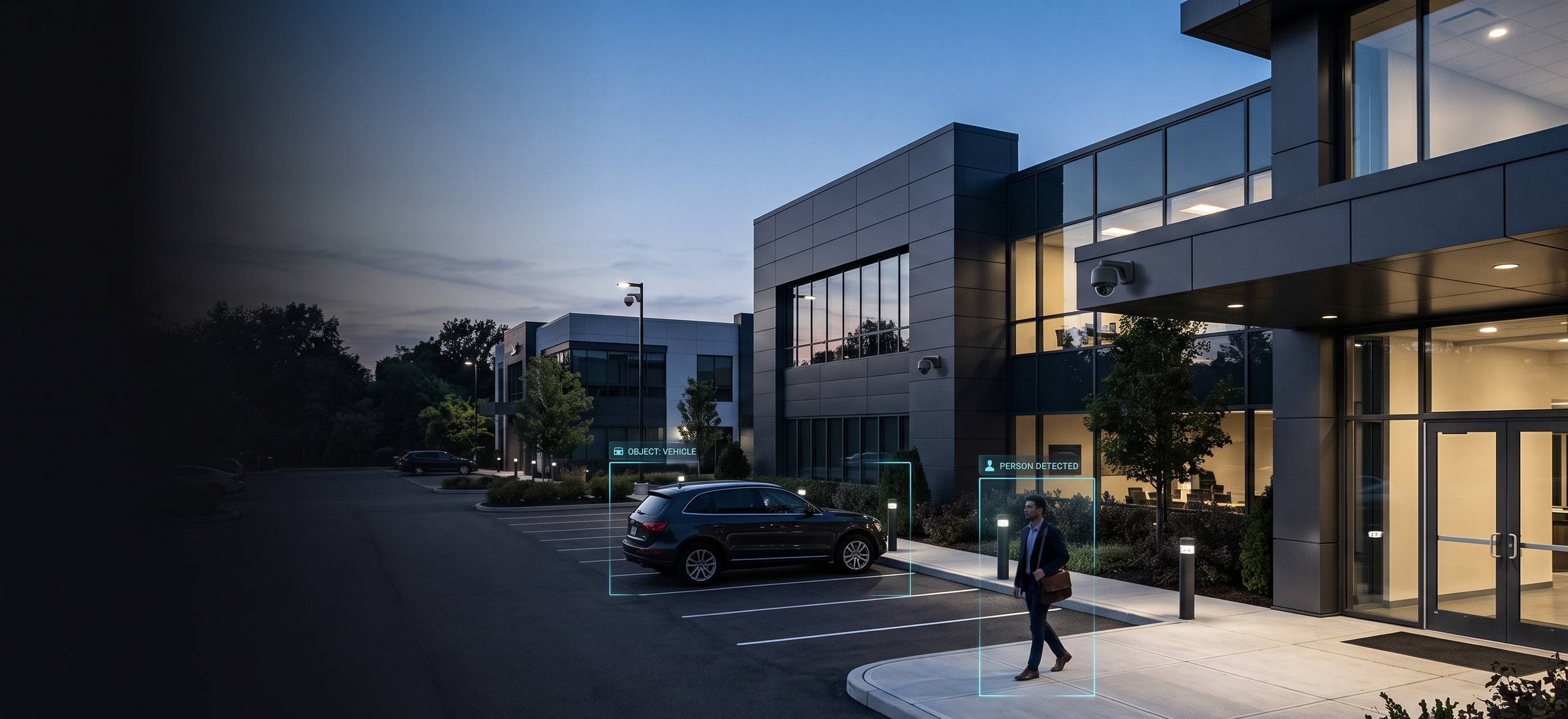
Table of contents
Most property managers don't think about their property security system until something goes wrong.
A break-in occurs. Vandalism keeps happening in the same area. A tenant reports suspicious activity. Or your team spends hours searching through security camera footage to figure out what happened.
By then, the problem may have been building for months.
Your cameras may be working perfectly, but that doesn't necessarily mean your property is being actively protected. If nobody is watching the feeds, incidents may only be discovered after the fact. If response times are slow, a situation can escalate before anyone intervenes.
Modern property security is moving beyond simply recording what happens.
AI-powered video surveillance can continuously analyze camera feeds, identify relevant activity, bring potential threats to a monitoring team for verification, and support faster response.
And a security system upgrade doesn't necessarily mean replacing every camera on your property.
In many cases, the opportunity is to make the cameras you already have smarter.
So how do you know when your property security system needs an upgrade?
Here are 10 signs to look for.
What Does a Modern Security System Upgrade Look Like?
Traditional surveillance systems were primarily designed to record.
Cameras capture video, and when an incident occurs, someone searches through that footage to determine what happened.
That remains useful for investigations, but it creates an important limitation: the incident has already happened.
Modern AI video surveillance can take a more proactive approach.
AI can continuously analyze camera feeds and identify activity that matches specific security criteria. Potential events can then be surfaced to human monitoring teams for verification and appropriate response.
A modern security system is therefore not simply about installing more cameras. It's about getting more value from the cameras and infrastructure you already have.
10 Signs It's Time to Upgrade Your Property Security System
1. Your Cameras Record, but Nobody's Watching
Having security cameras installed doesn't necessarily mean your property is actively monitored.
If your team only reviews footage after an incident, your cameras are primarily serving as an investigation tool. They can tell you what happened, but they aren't necessarily helping you intervene while it is happening.
This becomes especially difficult on commercial properties with dozens or hundreds of cameras covering parking areas, entrances, loading docks, stairwells, and other locations.
No security team can realistically watch every camera feed continuously.
What to consider
Evaluate whether your property needs real-time or remote video monitoring that can continuously analyze camera feeds and bring relevant activity to someone's attention as it happens.
2. The Same Security Incidents Keep Happening in the Same Places
Repeated incidents are one of the clearest signs that your current security approach may have a gap.
Vehicles may repeatedly be broken into in the same section of a parking garage. People may continue entering through an unsecured gate. Vandalism may keep occurring around the same building entrance.
When the same problem keeps happening in the same location, it's worth looking beyond each individual incident.
The real question is: What security gap is allowing the problem to keep happening?
What to consider
Review your incident history alongside your camera coverage.
Look for patterns involving location, time of day, type of incident, entry and exit points, and areas with limited monitoring.
The answer may involve better lighting, access control, monitoring, deterrence, or a combination of these measures.
3. Response Times Are Slow or Inconsistent
A camera can capture an event without anyone responding to it.
In a traditional security setup, an incident may need to be noticed by a guard, reported by a tenant, or discovered later during a review of recorded footage.
Even when an alert is generated, someone still needs to determine whether it represents a genuine threat and decide what to do next.
The longer that process takes, the more opportunity there is for a situation to escalate.
What to consider
Measure the entire response process, from detection to verification to response.
Don't look only at average response time. Understanding where delays occur can reveal security gaps that aren't obvious from a single metric.
4. Tenants, Employees, or Visitors Are Raising Safety Concerns
Not every security problem appears in an incident report.
People who regularly use your property may notice things that formal security data doesn't capture.
They may report poorly monitored parking areas, people entering after hours, recurring loitering, suspicious activity around entrances, unauthorized access, or safety concerns in common areas.
A single complaint doesn't necessarily indicate a major security problem. But repeated concerns are worth investigating.
What to consider
Track recurring safety complaints and compare them with your security footage and incident history.
You may discover patterns that aren't visible in traditional security reports.
5. Your Property's Risk Profile Has Changed
Security requirements can change as your property changes.
New buildings may have been added. Parking patterns may have shifted. Tenant occupancy may have changed. New access points may have been created. Or the types of incidents occurring on the property may be different from when the current security system was installed.
Your security strategy needs to evolve with the property.
What to consider
Review whether your current security system still matches your property's layout, current occupancy, access points, parking areas, high-risk locations, recent incident patterns, and current security requirements.
If your property has changed significantly but your security strategy hasn't, there may be gaps that have gone unnoticed.
6. Your Existing System Can't Support New Technology
Older security systems can become difficult to work with as technology evolves.
Your cameras may still function perfectly well, but they may not easily connect with modern analytics, monitoring, access control, or other security technologies.
Replacing an entire camera network can be expensive and disruptive, particularly for large commercial properties and portfolios.
That's why compatibility with existing infrastructure is becoming an increasingly important part of a security system upgrade.
What to consider
Before replacing your cameras, determine whether your existing infrastructure can support modern AI video surveillance and monitoring.
A camera-agnostic approach may allow you to add new capabilities without replacing your entire surveillance network.
7. Trespassing, Package Theft, or Loitering Goes Unaddressed
Some security problems become so common that they start to feel normal.
Packages are repeatedly stolen.
People enter restricted areas.
Vehicles access spaces they shouldn't.
Groups gather around entrances after hours.
Your cameras may capture all of it, but if nobody responds while it is happening, the system is primarily documenting the problem rather than helping address it.
Modern security systems can add active deterrence to the process.
Depending on the system and situation, this can include live voice warnings, lighting integrations, or escalation to onsite personnel.
What to consider
Identify recurring incidents that your team currently discovers after the fact.
Then ask which of these incidents could potentially be detected and addressed earlier.
8. Your Staff Spend Hours Searching Through Video
Security footage is valuable.
Finding one specific event in several hours of recordings, however, can consume a significant amount of your team's time.
Imagine receiving a report that something happened between 10 p.m. and midnight.
Someone then has to identify the correct camera, locate the relevant time period, search through the footage, find the event, review what happened before and after it, and document the incident.
For property teams already managing tenants, maintenance, vendors, operations, and other responsibilities, this can become a significant drain on time.
AI-powered video analytics can reduce some of this workload by identifying relevant activity and surfacing events for review.
What to consider
Track how much time your team spends searching through video each week.
If a significant amount of that time is spent finding incidents after they happen, automation and AI-powered monitoring may be worth considering.
9. You Rely Entirely on Human Guards for 24/7 Coverage
Security guards remain an important part of many property security strategies.
But one person can only monitor a limited number of locations at a time.
Large commercial properties may have parking garages, entrances and exits, loading docks, stairwells, perimeter areas, storage areas, restricted zones, and multiple buildings.
Breaks, shift changes, competing responsibilities, and the physical size of a property can create coverage gaps.
This doesn't mean technology needs to replace your guards.
Instead, technology can help extend their coverage.
What to consider
Map your guard coverage against the areas and times where incidents actually occur.
This can help identify where remote video monitoring or AI-powered detection could supplement your existing security personnel.
10. You Haven't Reassessed Your Security Setup in Years
Even a security system that worked well when it was installed can become less effective over time.
Your property may have changed.
Your tenants may have changed.
Your security risks may have changed.
Your technology certainly has.
If your last security assessment happened years ago, your current surveillance setup may no longer reflect the property's actual needs.
What to consider
Schedule a regular security review that examines camera placement, blind spots, incident patterns, response times, lighting, access points, guard coverage, monitoring procedures, and existing camera capabilities.
A security system should evolve as the property evolves.
What Should You Look for in a Modern Property Security System?
If several of these warning signs sound familiar, the next question is what a modern security system should actually do.
Adding more cameras may help in some situations, but cameras alone don't solve every security problem.
A modern system should make it easier to identify relevant activity, verify what is happening, and respond appropriately.
Here are five capabilities worth looking for.
Real-Time Detection
Security teams shouldn't have to manually watch every camera feed to know when something important is happening.
AI-powered video analytics can continuously analyze camera feeds and surface activity that matches specific security criteria.
This allows human teams to focus their attention on events that may actually require action.
Human Verification
AI can identify potentially relevant or suspicious activity, but not every detection represents a genuine threat.
Human verification adds another layer of judgment before an event is escalated.
This can help reduce unnecessary responses while ensuring that potentially important situations are properly assessed.
Active Deterrence
An alert tells you that something is happening.
Active deterrence gives your team an opportunity to do something about it.
Depending on the system and situation, active deterrence can include live voice-down warnings, lighting integrations, security personnel escalation, or other connected response measures.
The goal is to move beyond simply documenting incidents toward responding while they are still manageable.
Compatibility With Existing Cameras
A security upgrade doesn't always require replacing your entire camera network.
A camera-agnostic security platform can allow property teams to add AI-powered capabilities to existing surveillance infrastructure.
For properties that have already invested significantly in cameras, this can make modernization more practical and less disruptive.
Incident Documentation
A useful security system should make it easier to understand what happened, when it happened, where it happened, how it was handled, and what happened afterward.
Good incident documentation can also help property managers identify recurring patterns and make better security decisions over time.
From Passive Surveillance to Proactive Security
The biggest difference between traditional surveillance and modern AI-powered security is what happens after the camera sees something.
Traditional cameras record an event so that someone can review the footage later.
An AI-powered security platform can analyze camera activity as it occurs, identify events that may require attention, and bring those events to a monitoring team for verification.
This changes the role of your existing cameras.
Instead of simply storing footage for investigations, your surveillance infrastructure can become a source of real-time security intelligence.
The goal isn't simply to collect more video.
It's to make the information captured by your cameras actionable.
Property Security Upgrade Checklist
Before investing in a new security system, ask your team:
- Are our critical areas actively monitored?
- How quickly are incidents detected?
- How quickly are potential threats verified?
- How quickly can someone respond?
- How many hours do we spend searching through video?
- Which incidents keep happening repeatedly?
- Where are our security blind spots?
- Can our existing cameras support modern AI analytics?
- Can our system provide active deterrence?
- When was our last comprehensive security assessment?
If you answered "no" or "not sure" to several of these questions, your property may have an opportunity to modernize its security without replacing its entire camera infrastructure.
How VIDISKY AI Helps Modernize Property Security
VIDISKY AI adds an AI-powered security layer to existing camera infrastructure.
Instead of relying solely on cameras to record what happened, VIDISKY AI helps property teams move toward a more proactive approach to surveillance.
The platform combines AI-powered detection, continuous monitoring, human verification, real-time alerts, active deterrence, and incident documentation.
This can help property teams identify relevant activity, verify potential threats, and respond while an incident is still unfolding.
Most importantly, upgrading your security doesn't necessarily mean replacing the cameras you already have.
The opportunity may be to make your existing cameras smarter.
Conclusion
A security upgrade doesn't have to start with a major incident.
If your cameras are rarely monitored, the same incidents keep happening, response times are inconsistent, or your team spends hours searching through footage, your current property security system may already be showing signs that it needs attention.
The right solution will depend on your property, existing infrastructure, and specific security risks.
For some properties, that may mean improving lighting or access control.
For others, it may mean adding AI-powered video monitoring and active deterrence to an existing camera network.
The important question is no longer simply whether your cameras are recording.
Ask whether your security system is helping your team identify problems early and respond while they are still manageable.
That's where AI-powered security can make a difference.
VIDISKY AI helps property teams move beyond passive surveillance with AI-powered detection, continuous monitoring, human verification, and active deterrence, while working with existing camera infrastructure.
Is Your Property Security System Doing Enough?
See how VIDISKY AI can help turn your existing surveillance infrastructure into a more proactive security system.
Request a VIDISKY AI Demo
Related Blogs
Thought Leadership
September 4, 2026
The Hidden Costs of Reactive Security for Commercial Properties
Commercial property security budgets rarely account for the true cost of reacting after an incident has already happened. This post breaks down the hidden costs of reactive security, from theft and vandalism to liability exposure and lost staff hours, and shows how VIDISKY AI helps property teams shift to real time, proactive protection using the cameras they already have.
The Hidden Costs of Reactive Security for Commercial Properties
September 4, 2026
Thought Leadership
August 27, 2026
How to Increase Property NOI With Smarter Security
Rent growth and expense cuts aren't the only levers for property NOI. This guide breaks down how AI-powered security reduces preventable losses, frees up staff time, and protects tenant retention, and how VIDISKY AI helps property owners put that strategy into practice using the cameras they already have.
How to Increase Property NOI With Smarter Security
August 27, 2026
Thought Leadership

July 7, 2026
How to Improve Parking Lot Security at Apartment Communities
From vehicle theft to trespassing and late-night incidents, unmonitored lots create real risks for residents and real liability for property managers. This guide explores the most effective, AI-powered strategies to transform your parking areas into monitored, secure, and legally defensible spaces.
How to Improve Parking Lot Security at Apartment Communities
July 7, 2026